Archive for the ‘BodyBuilding’ Category
Escape from the city
 December 1st, 2020 |
  Author:
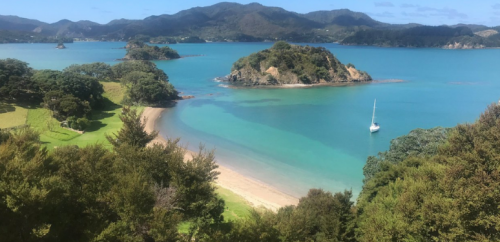
 About a month ago after 2 lockdowns in Auckland’s CBD I finally got out of the city. Right now I am in the beautiful Bay of Islands resort town Paihia. I lived here for a year when I was 19. Had not been here for 25 years.
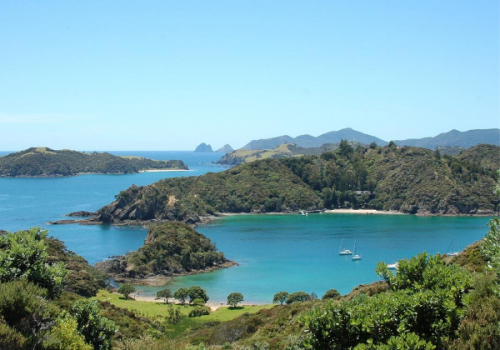
The ride up was pretty weird. Its been so long but after nearly 3 weeks here its gunna take some discipline to leave. I booked a bus out on thursday having delayed it by a week. I may delay for another week.
After this I intend to head to Queenstown for some mountain hiking. Here in Paihia I have been at the gym nearly every day. Current weight 106 kg with zero creatine. My only supps for 5 weeks have been vitamin D & fish oil.
I didn’t post for a while because its been a disruptive year but I have trained right through either at the gym every day when not in the 8 weeks of lockdown or with my dumbells & strength bands at home. Also I have been doing a lot of boxing bag work.
 Posted in
Lock Down Workouts
I’m in New Zealand & we had our first lock down for 6 weeks starting at the end of March. We actually eradicated the virus as New Zealand is an isolated island nation. Had zero virus or lockdowns for 3 months. Unfortunately the government has let 35,000 people in from all over the world and now we are back to square one.
A new lock down which began a few days ago with about 12 hours notice.
So here at home I have some heavy dumbbells, jumprope & a pile of strength bands of various sizes. I stocked up on strength bands after the first lock down.
So that’s it. I do 100 press ups & a bunch of dumbbell curls & tricep extensions which has resulted in great arm growth. I have a doorway pull up station & a bunch of grip training gear too. Try to do some jump rope everyday.
I went hard at the gym for 3 months between lockdowns & was doing real well. Taking creatine, whey & HMB/laxogenin. The supps did fry my kidneys however & I am letting the bod have a break from heavy supplementation for a little while.
 Tags:
Tags: Ostarine Cycle Complete
I completed my Ostarine about 3 weeks ago.
It definitely worked & I will definitely take it again. The best thing was the healing of my rotator cuff injury & a decrease in aches and pains in my body.
Ostarine clearly has anti-aging benefits. When I was on higher dosages some of my workouts were something else – like I was 30 again.
Generally the effects were subtle. Unfortunately in the second week I got poisoned by black mold at work & got sick but this cleared up after a week.
My physique also became better. In general its a bodybuilding tonic for sure.
Now post cycle my balls did not shrink but erections deceased substantially so I have been taking a testosterone booster, boron , dim etc.
I am also using more pine pollen than usual so yes it shuts your gonads down a bit.
How much testosterone is in Pine Pollen?
It’s estimated that 10 grams of pine pollen contains 0.8 micrograms of testosterone.
Thats 800 nanograms. That’s for the powder not the concentrated tincture.
Lets makes a guess that a dose of pine pollen tincture has 8000 nanograms. That seems reasonable.
Average male free testosterone is 300 to 1,000 nanograms per deciliter (ng/dL) of blood.
That’s one tenth of a liter so really its 3000 to 10,000 nanograms per liter & you have 7.2 liters.
So total testosterone in the blood for a 200 lb male is 21000 – 72000 nanograms.
Sublingual testosterone has a short half life possibly only four hours.
That means you will need to dose repeatedly with pine pollen tincture possibly 4x per day.
Each dose will need to be a fair amount perhaps two teaspoons absorbed under the tongue.
At that rate you may be able to get an additional 10000-20000 nanograms per day into your bloodstream.
So this is only worth it by making your own tincture. Also due to the short half life its unlikely that there will be an accumulation of testosterone over time. Its also unlikely to cause gonadal shutdown.
To be effective you will be using about a shot glass of pine pollen tincture per day.
To go into shutdown on pine pollen tincture maybe 2-3 shot glasses per day could do it over a period of time.
All of this is anecdotal. Pollen will vary in quality and testosterone levels. The extraction process will vary as will the sediment levels and strength of the tincture batches.
Certainly its worth it to buy pollen in bulk and make up large batches of tincture in multiple jars.
Its not worth it to buy small bottles of tincture and take a few small drops per day.
There is more to it though as Pine Pollen contains DHEA and a number of other androgenic substances that will enhance testosterone production by the body. Its highly likely that a shot glass per day of tincture will stimulate testosterone production in addition to the free testosterone directly introduced.
Four natural things to take instead of SARMs
1. Pine Pollen Tincture
2. Tongkat Extract
3. Colostrum
4. IGF Antler extract
Must I elaborate? Yeah OK…
Pine Pollen I have posted about before & I recently got an email with the most awesome sales copy about a new pine pollen tincture. Here’s a copy of that sales page: Pine Pollen Advert
Pine Pollen contains much more than just testosterone, including sex pheromones that make you more attractive to the ladies. DHEA prohormone is in there too.
Its nice to see some western research backing up the TCM which has used pine pollen for a very long time. Yes Pine Pollen can dramatically boost Testosterone even to the point of shutdown if you take too much.
This brings me to the next supplement which is also backed up by leading scientific research. LJ100 extract of Tongkat Ali
All the science & studies are on there. Basically the tongkat will act as a quasi PCT after using the Pine Pollen. Cycle between them four weeks each. This should keep your testosterone elevated all the time to high normal (for a young man). So us old geezers can indeed naturally have high youthful testosterone without drugs. I guess you can use both at once too if you want.
Next is colostrum
Colostrum is super calves milk basically. IGF is a large molecule that does not digest. Yet Colostrum works – go figure. There are lipo delivery options for colostrum but I don’t know that its required.
Finally an antler derived IGF tincture will do the trick sublingually.
Like Pine Pollen there is much more goodness in Antler than just IGF.
These four supplements can keep your testosterone & growth hormone levels high at any age.
PS: If you want a Number 5 I will throw in Berberine which is like an “extremely” mild cardarine. If you want to lose fat and improve cardio check it out. It is not SARM or steroid like however and will only give mild long term results. Berberine has many benefits, one of which is to activate AMPK.
AMPK reduces belly fat and combats metabolic syndrome.
https://www.lifeextension.com/magazine/2017/ss/boost-ampk-to-reduce-abdominal-fat
Additional supplements to activate AMPK include Hesperidin and Jiaogulan or Gynostemma pentaphyllum.
AMPK Activator (Actiponin), 450 mg (per serving), 60 Quick Release Capsules
Ostarine Update
Week 2 is done – it has sucked
Week one was great. My gym workouts were way better and everything was fine.
Then the insomnia began. Four nights in a row the worst insomnia I’ve ever had. OK after that came the sore throat & head cold.
Not the worst head cold but bad enough to stop me going to work & the gym.
If this is what SARMs do then whats the fucking point?
I just cut my dose back down to 50% which is what it was in the first week. If the sides dont stop I will ditch the Ostarine & never take SARMs ever again.
Waiting to see.
UPDATE: Figured out my sinus infection was caused by black mold exposure at work – nothing to do with the SARM
SARMs, Creatine and Magnesium
I am giving Ostarine a try. My first ever PED after 35 years of bodybuilding and weightlifting. I am on week 2. Week one was great. I noticed a 20% greater resilience in the gym. More pump.
This week I got hit with terrible insomnia. Worse than normal insomnia although we have had a heat wave here with high humidity & mosquitos at night. After 4 nights in a row there was a 6 degree celsius temperature drop & I got a midsummer cold.
Its dawned upon me that the insomnia is a symptom of magnesium deficiency. Aggravated by the climate sure but its still not normal.
SARMs clearly must dramatically increase your magnesium requirement. Vitamin D and Zinc also.
So I started supplementing & will continue to do so for the next six weeks. Kind of a shame but there you go. I wonder how many other SARM side effects are nutrition related?
Creatine also needs to be used with increased magnesium intake. Doing so dramatically improves strength gains.
For a triple bang do SARMs, creatine & Magnesium together.
https://jrnlappliedresearch.com/articles/Vol3Iss1/ASHMEAD.htm
https://www.bodybuilding.com/fun/md13.htm
Judo Vs Boxing
My flatmate is a Judo champ. 10 years, black belt & has won contests. He is quite a big guy – I thought bigger than me but no I am heavier by at least 10 kg.
I’m not a trained fighter but have done a bit of boxing & Iron Palm. I can not beat him in a straight fight. A real fight with weapons is something else.
So I am thinking who wins Judo or the striker? Looking around online many say the boxer will if he is an elite level same as the Judo black belt & can get the hits in without a take down.
Looking on youtube in the ring its actually the Judokas who take out the strikers, even BJJ gets beaten.
So Judo is good but its a shitty way to fight , I don’t like grappling simply I am averse to so much contact with other males – yuck.
But you can argue in a 1:1 weaponless fight they will usually win.
So How can you improve your odds against a Judoka?
1. Be bigger and stronger – surely its easier to add some weight & strength than to spend months learning Judo technique & actually getting good at it.
2. Iron Palm & Iron Body. Fuck fighting a guy that can smash solid concrete even if you know Judo. Learning curve is zero – it just takes a time investment
3. Get better at striking & throw in Muay Thai elbows, knees etc to complement the boxing
I don’t think there is much more you can do than that. The Judo guy is screwed against weapons & multiple opponents anyway.
There is one final thing you can do short of a concealed knife or gun…
Learn Judo too.
Blood viscosity & exercise type
A leading cause of death in weight training athletes is heart attack caused by thick blood.
High testosterone, SARMs and Roids are linked with increased blood thickness. Many weight trainers pride themselves by shunning aerobics and embrace anaerobic training and the muscle pump.
The blood itself is an adaptive substance that thickens its viscosity with exercise.
Blood will congeal and thicken when compressed into muscle tissue. When it pools in some area its natural tendency is to congeal and become thick.
This increases the nutrient density in the muscle tissue. However its bad for your heart when this happens over and over with no relief.
Think if all you do is this blood thickening exercise every day. It strains the heart and burdens the brain and other organs.
The muscles will grow big and strong. Health benefits will occur but there is a hidden bad effect on the cardio vascular system and all of the organs.
Eventually for some this means heart attack or stroke.
Aerobic exercise on the other hand will lower plasma viscosity. Hematocrit is what we measure to check the blood viscosity.
Dehydration is a common factor to increase the risks.
Aspirin, garlic, ginger, cayenne pepper, Vitamin E, grape seed, ginkgo & turmeric can all help to thin the blood as can coQ10. Venesection & blood donation is another big help. There are other natural substances that can also assist. Chinese medicine has its offerings too.
Interestingly Isometric training while a strength regimen that immediately raises blood pressure actually conditions the cardio vascular system & lowers blood pressure with time. Weight training will also lower blood pressure in the medium to long term.
The bottom line is that we love to lift weight & get big & strong. But we must also love endurance and aerobics.
It doesn’t matter what can be done with HIIT anaerobic conditioning. Sure its great & saves time. But it wont replace the requirement for aerobics and endurance training.
You have to do cardio. Long endurance training to thin your blood and lower your blood pressure.
There are plenty of scientific papers backing this up – you can google the following one for starters:
“Effects of a moderate-intensity aerobic program on blood viscosity, platelet aggregation and fibrinolytic balance in young and middle-aged sedentary subjects”
Blood pressure update #2
Since my blood pressure post about 4 months back I totally cut out red meat & all junk food.
Increased fruit & veges & added coconut water for potassium.
This was at the start months ago. I have had good BP ever since. I do the breathing when I feel the need & avoid stress where possible.
Anybody can lower blood pressure I believe. Hibiscus tea is great too.
Have increased cardio like I said in prior posts too.
High Blood Pressure is incurable western medicine says – what a joke.